Training Tip: How Well Do Your Horse’s Brakes Work on the Trail?
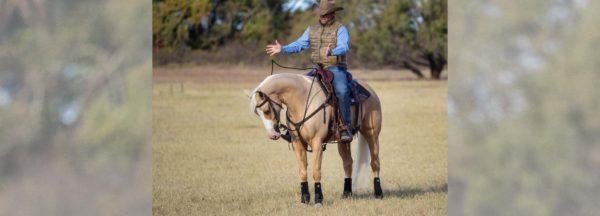
Your horse may stop as soon as you lower your weight in the saddle and take your legs off him in the arena, but what does he do when you take him on the trail? If you’re like most horsemen, when you ask your horse to stop on the trail, it’s probably not so pretty. There’s good reason for that. The arena is a relatively safe, controlled environment. With four walls surrounding you, it’s easy to get your horse to focus on you and what you’re asking him to do. On the other hand, the trail is filled with unlimited distractions. In order for your horse to respond well outside the arena, you have to have a great line of communication established with him.
Fundamentals-Level Challenge: Draw to a Stop
Goal: To move the horse forward on a loose rein at any gait, then pick up on the reins with the lightest degree of pressure, causing the horse to immediately come to a complete stop and soften vertically to the bit. Get step-by-step instructions on how to teach this exercise in the Fundamentals Series.
Why it’s important: Most horses’ first reaction when you pick up on two reins is to throw their heads up and pull against the bit and run through it. This exercise will get the horse thinking about stopping and softening rather than speeding up and resisting when you pick up on the reins.
A great trail horse should come to a complete stop off the slightest suggestion from you. A horse that flips his nose up and braces against the rein pressure when you pick up on two reins to stop him is not only disrespectful and sorry-broke, but also dangerous, especially on the trail.
When you’re on the trail: Walk the horse forward on a big, loose rein. When you’re ready to ask the horse to stop, pick up on both reins and glue your hands to your legs, down near your knees. Initially, when you pick up on the reins, do so in four separate steps: 1) slide one hand down the rein, 2) slide your other hand down the rein, 3) slightly tip the horse’s head to one side by bringing one hand back to your leg and gluing it there, and 4) straighten the horse out by bringing your other hand back to your leg and gluing it there.
Wait for the horse to stop moving his feet and soften vertically, creating slack in the reins. As soon as he does that, immediately throw the reins up his neck toward his ears. The quicker you release the pressure, the quicker the horse learns that he did the right thing.
After you release the reins, flex the horse once each way. This will break up the exercise for the horse so that he doesn’t anticipate walking off again as soon as you release the reins, and it’s a good reminder for him to stay soft. After you’ve flexed the horse, walk him off for 50 feet or so on a big, loose rein and repeat the exercise.
When the horse is doing the exercise well at the walk, try it at the trot and then the lope.
Have a horsemanship question or looking for more training tips? Check out the No Worries Club.
