Training Tip: Why You Should Train Your Horse on the Trail
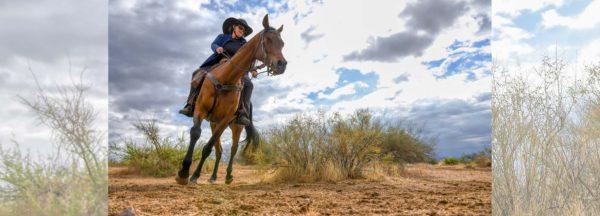
No matter what sort of horse we have in for training at the ranch (Performance Horse or Academy Horse), we always follow the golden rule: Long rides, wet saddle pads and concentrated training. A huge part of that formula is getting your horse outside the arena. Riding outside the confines of an arena just makes a horse an all-around better mount. It challenges everything you’ve taught him in the arena – how to soften and trust you as a leader. When you’re riding on the trail and he gets spooked, will he still listen to you and rely on your leadership abilities? Or does he use the reactive side of his brain and take matters into his own hands?
I’m a firm believer that regardless of how much a horse has won in the arena, if he can’t pack a 95-year-old lady down the trail safely, he’s not very valuable. And quite honestly, in my opinion, training a horse on the trail is more fun than being stuck in the arena.
I ride all my horses outside the arena after the first two weeks they’ve been started under saddle. When I do start riding them outside, I ride them exclusively on the trail for six to seven weeks. It’s really important to me that my horses are the same quiet, calm, soft and responsive mounts on the trail as they are in the arena because after their performance careers, they’re going to be doing some sort of trail riding. After an owner has spent the money and time to get a horse trained to compete at a high level of performance, they’ve got to be able to do something with him after his competitive career is over.
Once the horse is calm and responsive riding outside, then I go back to concentrating on arena work and perfecting specific maneuvers. But, I still take him outside at least two times a week. No matter if I’m in an arena or on a trail, I can work on the same principles – softening the five body parts and getting the horse responsive.
I want my horses to know that it doesn’t matter where we are or what comes about, they can trust me to control the situation and keep them safe. And you’d do well to teach the same response to your horses.
Have a horsemanship question or looking for more training tips? Check out the No Worries Club.
