A Great Desensitizing Tool
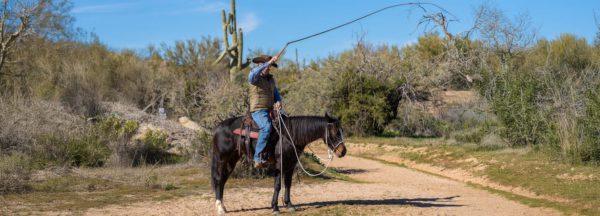
Desensitizing a horse to a stock whip is an important tool in building a calm, confident and responsive partner. It’s something we introduce to all of our training horses and make sure they’re confident with it.
It’s an Australian tradition to be able to crack a stock whip all around a horse on the ground and under saddle while he remains relaxed to prove he’s truly broke. On the big cattle ranches in the country, stock whips are used daily to move cattle, and if a horse can’t handle the sight and noise of a whip cracking next to him, he isn’t worth much.
We love to desensitize horses to the stock whip because it not only gets the horse used to something moving around him and making a loud noise, but it’s also really quick and reactive. Horses are always more scared of objects that move quickly and make a noise. If something happens quickly, you don’t want the horse to use the reactive side of his brain and panic. Instead, you want him to use the thinking side of his brain and calmly assess the situation and look to you for guidance. If you can get your horse to ignore the stock whip cracking right beside him with high energy, it’s a good sign he’s broke.
Special Offer: Now through April 22, save 10% on our Australian Stock Whip.
